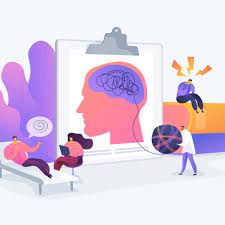
Discover examples of cognitive learning and how they enhance problem-solving, decision-making, and critical thinking skills.Cognition Learning Theory is major area of study in the field of Educational Psychology. It is likely that you are reading this article because you are interested in studying the topic and you wish to gain some insight into thinking and learning processes in an educational context.
Studying cognition and learning means thinking about the ways people process information, solve problems, make decisions and expand their knowledge. To see how this is accomplished, we consider briefly what it means for a student to think and learn in the context of Educational Psychology.
10 Facts About Cognition Learning Theory You Must Know.
- There is little scientific consensus regarding definitions of cognition or learning.
- Cognitive and learning theory has moved through three distinct periods of study. These periods are the response acquisition period, the knowledge acquisition period and the knowledge construction period.
- Early in the history of psychology, the study of cognition was strongly influenced by associationist theory.
- Constructivist theories of cognition and learning generally assume that the knowledge human beings possess does not exist in a perfect form outside human existence.
- Information-processing theory was greatly influential in shaping educational practice because it highlighted the importance of attention and memory processes in learning.
- Constructive theory realizes that all knowledge is subjective and created in the human mind, not discovered in nature.
- In Situated cognition, the meaning that people derive from physical and social events is considered to be extremely important to understanding cognition.
- Children who suffer from learning difficulties, particularly in situations where the culture of the home and of the school varies, tend to experience difficulties not necessarily because of a lack of ability, but because they have not been mediated into the culture of the school.
- Metacognition is a higher level of cognitive processing because it refers to conscious decisions that we may make about which cognitive processes and strategies to employ under certain circumstances.
- Vygotsky maintained that the development of internal thought processes was the result of social experiences that have been internalized and transformed through language
Studying cognition learning theory is an exciting and challenging task that requires students to be interested in subdisciplines such as cognitive psychology, neuropsychology, instructional psychology, philosophy and educational matters. As a student of Educational Psychology, you will often consider contradictory (and at times confusing) aspects of theories of cognition and learning, and speculate on their relevance to educational practice. Educational Psychology requires us to consider how these theories are relevant to complex educational situations in which a variety of factors interact and combine to produce differing effects.
To understand cognitive learning, it helps to first define it: It is an active style of learning that focuses on maximizing the brain’s potential. Instead of passive memorization (rote learning), it involves understanding, reasoning, problem-solving, and connecting new information to existing knowledge.
Here are concrete examples of cognitive learning, broken down by the specific mental skill being used.
1. Explicit Learning (Conscious Knowledge)
This is when you actively seek out information and intentionally commit it to memory.
-
Example: A medical student learning the names of the bones in the human body. Instead of just repeating “femur, tibia, fibula” over and over, they draw a skeleton, color-code the bones, and say the names out loud while touching their own leg to create a physical connection to the word.
-
Everyday version: Using a new app. You deliberately explore each tab, read the help menu, and test the buttons to figure out how the software works.
2. Implicit Learning (Unconscious Knowledge)
This is learning that happens without you even realizing it. You acquire knowledge just by being exposed to an environment.
-
Example: A child growing up in a bilingual household. They are never formally “taught” grammar rules, but they absorb the sentence structures and vocabulary naturally by listening to their parents converse.
-
Everyday version: Picking up the slang or accent of a new city you moved to, simply by listening to your coworkers talk for a few months.
3. Meaningful Learning (Connecting to Prior Knowledge)
This occurs when you link new information to something you already know, giving it context and relevance.
-
Example: A history teacher explains the Cold War by comparing it to a “tug-of-war” between two rival sports teams. A student who already understands sports rivalries can now easily grasp the concept of proxy wars, espionage, and arms races by mapping it onto that familiar framework.
-
Everyday version: Learning to cook a new recipe. You already know how to sauté onions, so when a new recipe asks you to “sweat” vegetables, you connect that new term to a skill you already possess.
4. Discovery Learning (Problem-Solving)
This involves figuring out the rules or solutions through trial and error and experimentation, rather than being told the answer.
-
Example: A physics student is given a ball and a ramp and asked, “How does the angle of the ramp affect the speed?” Instead of reading the formula in a textbook, they roll the ball down at different angles, record the times, and derive the mathematical relationship themselves.
-
Everyday version: Putting together a piece of flat-pack furniture without looking at the instructions. You look at the screws and panels and figure out which piece goes where by visually matching the shapes.
5. Metacognition (Thinking About Your Own Thinking)
This is the highest level of cognitive learning, where you monitor your own understanding and adjust your strategies.
-
Example: While studying for a math exam, a student works through a practice problem and gets it wrong. Instead of moving on, they stop and ask themselves, “Where did my logic break down? Did I misread the question, or did I apply the wrong formula?” They then go back to correct their thought process.
-
Everyday version: While reading a dense article, you realize you haven’t actually absorbed the last two paragraphs. You stop, re-read them, and summarize them to yourself in simpler words before continuing.
6. Cognitive Mapping (Spatial Awareness)
This is the mental process of acquiring and encoding spatial information.
-
Example: A taxi driver learning the streets of a new city. Over time, they create a “mental map” in their head. They don’t need GPS to know that if they turn left at the red church, the train station is two blocks ahead.
-
Everyday version: Navigating a large grocery store. You know that the milk is in the back left corner, so you automatically walk to that area without looking at the overhead signs.
7. Observational Learning (Modeling)
This is learning by watching others and then imitating the behavior.
-
Example: A new employee shadows a senior colleague. The senior colleague doesn’t give a lecture; they just handle customer complaints. The new employee watches how the senior speaks calmly, uses open body language, and repeats the customer’s concerns. The new employee then mimics this technique in their own calls.
-
Everyday version: A toddler watching their parent brush their teeth. The toddler picks up the toothbrush and mimics the back-and-forth motion simply by watching.
cognitive learning is a valuable approach to learning that emphasizes understanding, critical thinking, and problem-solving. By incorporating cognitive learning techniques into various contexts, individuals can enhance their learning experience, develop important skills, and achieve success in their personal and professional lives.