Head . It is formed by a spheroidal framework of flat bones where very delicate organs are enclosed, such as the control, registration and data processing center called the brain .
Summary
[ hide ]
- 1 Human body
- 2 Head
- 3 Other parts
- 4 Bones of the head
- 5 Sources
Body
The human body is topographically divided into three parts:
- Head .
- Trunk.
- Extremities ( Armsand Legs ).
In turn, each of them has other divisions:
Head
The head is located in the upper part of the body and is made up of a spheroidal framework of flat bones where very delicate organs are enclosed, such as the center of control, registration and data processing called the brain .
Pivots on the spine (cervical) and exerts rotational movements through the muscles of the neck . In the front, called the face, are other important organs that make up the senses, such as sight , hearing , balance , smell and taste.
The head is divided into two distinct areas: the skull and the face or facial mass.
Skull
Limits: cranial vault, skull base. Interesting parts: brain ( brain and cerebellum ), medulla oblongata .
Solid facial or face
- Eyes:
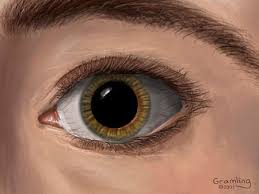
Interesting parts: pupil , cornea , lens , iris . Other parts: tear , eyelid , eyebrow , eyelash , tear duct .
- Ears:
Interesting parts: ear, ear canal, eardrum, snail, Eustachian tube.
- Nose:
Interesting parts: nostrils, nasal septum, pituitary, mucosa.
- Mouth:
Interesting parts: lips, jaws, teeth, chin, palate, mucosa, tonsils, tongue, saliva, pharynx, epiglottis, glottis, larynx, trachea, esophagus.
Other parts
The upper part of the head is covered with skin and, generally, with hair and this set is called the scalp.
All the bones that make up the head are fixed, with no joint movement except the so-called lower jaw or jaw, whose most prominent central point is called the chin.
The upper front part is called the front; Each side of the forehead, located on either side of the face above the corner of the eyes, is called the temple.
The lower back of the head, located under the base of the skull, is called the nape; the lower front part, located below the lower jaw, is called the throat. The surrounding part, together with the previous ones, forms a narrowing that joins the head with the trunk and is called the neck.
The cervical vertebrae, located in the posterior part, run through the neck, which hold the head to the spine and the important bundle of nerves called the spinal cord runs through the neck.
Inside the neck are two ducts that, starting from the pharynx, connect with the respiratory and digestive system and are called the trachea and esophagus. There are also two large blood vessels that, located on both sides, supply the brain and face and are called jugular and carotid.
Bones of the head
The bones of the head are considered to be the meeting of several deeply modified vertebrae. It includes the 8 bones of the skull and the 14 of the face.
The skull is a bone box that encloses the brain.
The face offers numerous cavities in which it houses the sense organs.
The 8 bones of the skull are:
- 1 fontal, which forms the forehead;
- 2 temporary, one on each side and laterally;
- 2 parietals, one on each side and above;
- 1 occipital, in the posterior and inferior part;
- 1 ethmoid, between the frontal and the sphenoid.
- 1 spheonides, at the base of the skull;
Frontal: It is an odd bone, located in the anterior paster of the skull.
The anterior face, convex and smooth, is covered by the skin. In it 3 eminences are distinguished: the glabella *, located above the root of the nose, the lateral frontal protuberances, located on both sides of the glabella and the superciliary arches * that correspond to the eyebrows and located below the frontal protuberances.
The posterior, concave face houses the frontal lobes of the brain.
The lower face forms the upper wall of the orbit and has an ethmoidal notch, in which the upper part of the ethmoid is housed. On both sides of this notch, there are two cavities: the frontal sinuses; and laterally, two concave surfaces, the orbital pits that make up a large part of the roof of the eye sockets.
Temporal: It is an even bone located between the occipital, the parietal and the sphenoid, enclosing the essential organs of hearing. It comprises 3 regions:
- The Flaky Portion;
- The Petrosa or Penasco Portion; and
- The Mastoid Portion
Parietal: It is an even bone, located between the frontal and the occipital and above the temporal bone. It is shaped like a quadrilateral and offers 2 faces and 4 edges.
The external (exocranial) face is converged and presents in the center of the parietal emissary.
The internal (endocranial) face is concave and its center presents a depression: the parietal fossa, which corresponds to the emisena of the same name; in addition, it is furrowed by branched channels like the ribs of a fig leaf; vessels are housed in these channels.
The thick and serrated top edge (1) articulates with the opposite parietal.
The lower (2) thin and sharp articulates with the squamous portion of the storm;
The previous one (3) articulates with the frontal;
And the posterior (4) with the occipital.
Occipital: It is an odd, medium and symmetrical bone, located in the posterior inferior region of the skull.
It has 2 faces, the exocranial and the endocranial.
The exocranial face (lower poster) is convex and in it is the occipital hole that gives way to the spinal cord. Behind this hole there is a rough eminence, the external occipital protuberance, which gives insertion to numerous muscles and on both sides of it are the occipital condyles that articulate with the glenoid cavities of the atlas.
The endocranial (anterosuperior) face is concave and is in 4 phases:
The top two are called brain pits, and
The lower two are called cerebellar fossae.
This face also presents the internal occipital protuberance.
In front of the occipital foramen there is a thick and truncated process, the basilar process that, going forward and upward, welds with the body of the sphenoid.
Ethmoid: It is an odd and a half bone located between the frontal and the sphenoid, in which 3 parts are distinguished:
- A vertical sheet;
- A horizontal, perforated sheet;
- Two lateral masses.
Sphenoid: It is an odd wedge-shaped bone, between the other bones of the skull, with all of which it articulates.
Due to its shape, this bone has been compared to a “bat”. It presents 4 regions:
- A cubic body;
- Two minor wings;
- Two major wings;
- Two pterygoid processes.