Reflex arc . Nervous activity has a reflex character. Reflex act is the basic mechanism of action of any reaction of the organism that arises in response to a stimulus such as blows or pain, and that is carried out by means of the reflex arc, which represents the morphofunctional unit of the nervous system consisting of a set of structure formed by the nerve pathways. It always means an involuntary, and therefore automatic, response not controlled by consciousness. For a reflex to occur, three different structures are necessary, but they are related to the stimulus that is going to provoke the response and to it. They are:
Receptors
Neurons
Effectors
Summary
[ hide ]
- 1 Reflex Arc Components
- 1 The receivers
- 2 The afferent or sensory nerve fibers
- 3 The efferent or motor nerve fibers
- 2 Exploring reflections
- 3 Classification of reflexes
- 4 Source
Components of the reflex arc
The fundamental structures of the reflex arc are:
- Receivers
- Afferent or sensitive nerve fibers
- Efferent or motor nerve fibers
- The effectors
Receivers
They are the structure located in the nerve endings, widely distributed in the body and which are specialized in capturing stimuli and transforming them into excitement that spreads as a nervous impulse. In the receptors there are neurons that are specialized according to the different stimuli. For example, there are specialized receivers:
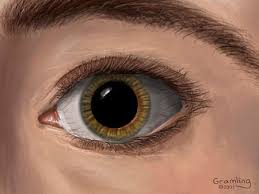
Eye → Vision
Ear → Hearing
Nose → Smell
Tongue → Taste
Skin → Touch (Temperature, Pressure, chemicals, pain, etc …)
Afferent or sensitive nerve fibers
They conduct the nerve impulse from the receptors to the nerve centers. Nerve centers are the structures found in the central nervous system (neuronal bodies that make up the gray matter of the spinal cord and brain ), where the information received is processed and a specific response to the given situation is elaborated.
Efferent or motor nerve fibers
They conduct the nerve impulse from the nerve centers to the effectors.
The effectors: The effectors are the structures located in the nerve endings located in the effector or working organs (generally muscles and glands ), where the nervous impulse is transformed into a response action that is executed by the effector organs.
Reflex examination
Among the most commonly explored reflexes are the patellar, a similar reflex in the elbows and ankles, and the Babinski reflex . The Babinski reflex is performed by stimulating the lateral part of the sole of the foot with a rounded object. Normally the toes curl downwards, except in babies younger than 6 months. On the other hand, if the fingers extend and open in a fan , it may be a symptom of an abnormality in the brain or in the motor nerves that go from the brain to the spinal cord. Not everyone has the same reflexes as some people respond quickly while others take longer. It strongly influences the force of the blow (or the action) and that you have to hit (act) in the right place for the reflex to occur.
Reflex classification
Reflexes can be classified in different ways depending on various criteria.
- According to the level of location of the nervous center in the central nervous system (spinal, bulbar, or medulla oblongata , mesencephalic, diencephalic, and cortical).
- Taking into account the stimulatory receptors, exteroceptive reflexes (from the surface of the body or the skin ) are described.
- According to the acting effectors, the reflexes are called motors, secretors, and vasomotors.
- Depending on the type of reaction, whether or not it is acquired by the individual in the course of his development, reflexes are classified as conditioned and unconditioned, which have different mechanisms of appearance.