Language myths in linguistics are common misconceptions or beliefs about language that have been passed down through generations. These myths often stem from misunderstandings or lack of knowledge about how language works. In this article, we will explore some examples of language myths in linguistics and debunk them with facts and evidenceIt is necessary to understand the Language Myth about language learning. Here are some of these:
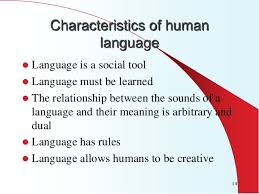
Languages are logical: Many people think that languages are logical. But it is incorrect. They are illogical. The symbols of a language are arbitrary. English language is all the more arbitrary because of its illogical spelling and pronunciation. The sound ‘f is presented by different spelling combinations in these words: lieutenant, enough, far, philosophy.
Languages are unlearn able:
Another misconception is that some languages are unlearned able. All of us have the same speech organs. If we have the will and time, we can learn any language of the world. Since all human beings have been bestowed with the same vocal organs, they can learn any language produced by the same vocal organs.
Some languages are better than others:
Another misconception about language is that some languages are less important than others. In fact, every language represents its culture in the best possible manner. English is an excellent language for expressing English culture. But it would be a poor language for the expressing our cultures. The best language for the latter is a regional language, viz; Urdu, or Punjabi. Every language is a perfect means of expression of the culture of people who speak it. Languages are not really comparable.
Exact equivalents within a language: Many people think that there are exact equivalents between two languages. It is also a misconception. Since every language is based on the history, tradition and culture of its people, the words of it cannot be translated exactly into the language. Exact equivalents cannot be found in any two languages of the world.
The layman also thinks that there are exact equivalents within language. He is wrong in thinking so. No two words of a language have the same meaning. We may have words similar in meaning but there must be a delicate shade of difference in their meaning e.g., “truth” and “validity”, “ill” and “sick”. Some people think that writing is language. It is not so. Speech is the primary form of language. Writing is its graphical representation only.
Examples of Language Myth In Linguistics.

Myth #1: “Some languages are primitive, illogical, or have ‘no grammar'”
The Claim: Languages like African American Vernacular English (AAVE), Hawaiian Pidgin, or Indigenous languages are broken, sloppy versions of “proper” languages.
The Linguistic Reality: All languages have complex, rule-governed grammar.
-
The Example: In AAVE, people say “He be working” to mean “He is habitually working” (as a job or routine). In Standard English, “He is working” means right now.
-
The AAVE sentence uses the habitual ‘be’—a distinct grammatical marker that Standard English lacks entirely. To say “He be working” in Standard English, you have to use a clunky adverb: “He is usually working.”
-
Debunk: AAVE is not “bad English”; it is a fully systematic dialect with its own tenses, aspects, and rules that Standard English does not possess. Calling it “lazy” is a social prejudice, not a linguistic fact.
Myth #2: “Dictionaries are the ultimate authority on what words really mean”
The Claim: A word’s “true” meaning is found in the dictionary, and if people use a word “wrong,” they are corrupting the language.
The Linguistic Reality: Dictionaries are descriptive, not prescriptive. They are historical snapshots, not legal constitutions.
-
The Example: The word “literally.” For decades, people have used it as an intensifier: “I am literally dying of laughter.” Prescriptivists (myth-believers) rage that this is “wrong” because you aren’t actually dying.
-
Debunk: Linguists point out that in 1909, the Oxford English Dictionary added this exact usage as an informal intensifier. More importantly, dictionaries merely record how native speakers use words. If every English speaker uses “literally” to mean “figuratively” for emphasis, then that is what the word means in that context. Language is a democracy, not a monarchy.
Myth #3: “Children learn language through imitation”
The Claim: Babies learn to talk by copying their parents’ speech, so if parents speak poorly, children will speak poorly.
The Linguistic Reality: Children actively construct grammar using innate cognitive rules; they do not just parrot.
-
The Example: Watch a 3-year-old say, “I goed to the park” or “Mama buyed me a toy.”
-
Debunk: No parent says “goed” or “buyed.” The child did not hear these words; they invented them by unconsciously applying the past-tense rule (-ed) to irregular verbs. This proves children are not parrots; they are data-crunchers who deduce underlying grammatical rules. Their “mistakes” are actually evidence of brilliant cognitive processing.
Myth #4: “Primitive tribes have primitive languages with tiny vocabularies”
The Claim: Isolated hunter-gatherer tribes can only think and speak about basic, concrete things (food, shelter, animals) because their languages lack abstract words.
The Linguistic Reality: All human languages have equal expressive power.
-
The Example: The Pirahã people of the Amazon have no words for numbers (no “one,” “two,” “three”).
-
Debunk: They don’t lack numbers because they are “dumb”; their culture simply doesn’t require exact counting. However, they have incredibly complex tonal and prosodic systems (they can whistle their entire language) and have more verb tenses than English. If a Pirahã child were dropped into New York City, they would learn English perfectly—and vice versa. No language lacks the capacity to create new words for new concepts (e.g., they can adopt or coin a word for “computer”).
Myth #5: “Language change is decay and laziness”
The Claim: Young people are destroying the language with slang, text-speak, and dropping letters (like saying “going to” as “gonna”).
The Linguistic Reality: Language change is natural, inevitable, and not decay.
-
The Example: The contraction “won’t” comes from “will not.” But originally, it was “woll not” in Old English. It contracted to wonnot, then to won’t.
-
Debunk: If our ancestors saw “won’t” in the 1600s, they would have called it lazy slang. Today, we consider it formal, proper English. The “lazy” contractions of today (gonna, wanna, ’cause) are simply the won’ts of the future. Furthermore, “text-speak” (like “lol” or “brb”) are not destroying language; they are adding new pragmatic markers that convey tone, empathy, and turn-taking in written media—features written English never had before.
Myth #6: “Some people have no accent”
The Claim: News anchors, or people from the Midwest, or people from certain regions “don’t have an accent.”
The Linguistic Reality: Everyone has an accent.
-
The Example: A newscaster from Ohio says “cot” and “caught” exactly the same way. A newscaster from New York says them differently.
-
Debunk: The Ohio accent isn’t “no accent”; it’s just the Inland Northern accent. The only reason it feels “neutral” is because it became the standard for mass media due to historical economic and broadcasting power, not because it is linguistically purer. To a British person, an American newscaster has a thick American accent. Accent is in the ear of the beholder.
The Ultimate Myth: “Logic and grammar are the same thing”
The Claim: A grammatically “incorrect” sentence is illogical and shows poor thinking.
The Linguistic Reality: Grammar is social convention; logic is mathematical truth.
-
The Example: The prescriptive rule: “You cannot end a sentence with a preposition.” (e.g., “Who did you go with?” is deemed “wrong”).
-
Debunk: This rule was artificially imported from Latin in the 18th century. In English (a Germanic language), ending a sentence with a preposition is perfectly logical and natural. Winston Churchill famously mocked this rule by saying: “This is the sort of bloody nonsense up with which I will not put.” He deliberately ended the sentence with prepositions to prove that the “logical” version is absurd.
Conclusion;
The language used in the myth is supralogical. In other words it goes above logic.In the myth, a symbolic language is used, this is used when you want to express something difficult to express with a univocal language, that is, with a single meaning and objective. This language manages to unite reality with diversity in a harmonious and meaningful way.
Studying language myths can also help us enhance our appreciation and understanding of different languages. By immersing ourselves in the mythical stories and narratives related to language, we can develop a deeper connection to the linguistic diversity present in the world. This, in turn, can inspire us to learn new languages, explore different linguistic traditions, and engage with diverse cultural perspectives.
In conclusion, the study of language myth is essential for gaining a holistic understanding of language, culture, and human communication. By exploring the cultural significance, tracing linguistic evolution, exploring language origins, preserving language heritage, and enhancing language appreciation, we can unravel the mysteries and complexities of language myth. So, why should we study language myth? The answer is simple: language myth provides us with a gateway to unlocking the profound connections between language, culture, and human experience.