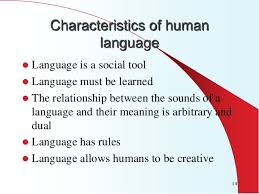
Linguistic change . It is an inherent characteristic of the language . Linguistic change refers to the process of modification and transformation experienced by languages over time, that is, diachronically, in which internal and external causes intervene.
Summary
[ hide ]
- 1 Types of changes
- 2 Causes
- 1 Internal causes
- 2 External causes
- 3 Importance of language change
- 4 Sources
Types of changes
- Phonetic change: it is the one that affects the sounds.
- Phonological change: when the differential content of phonemes and their distribution are transformed.
- Morphological-syntactic change: it refers to the grammar, form, structure and syntax of the language.
- Lexical-semantic change: it refers both to the meaning of wordsand to the lexical forms and written representations of the language.
Causes
Language change can occur for various reasons:
Internal causes
They are the properly linguistic ones, among which are:
- System pressure (paradigmatic pressure). Language is a system in which each element depends on the others, so the effect of any change in an element cannot be seen as an isolated phenomenon, but rather affects the entire structure of the linguistic system as a whole.
- The phonetic laws represent a factor of change by providing a summary of processes and correspondence rules, since the phonetic change does not reside in the isolated word, but in all the words that have that particular articulation.
- Different human tendencies:
- a) The law of least effort or law of physiological economy that relaxes and wears down the system. For example: the final Latin m was lost in the pronunciation of Plautus, and is not written in the tomb of the Scipios. In vulgar speech, the loss became general; thus, caballum gave in romance horse and novem gave new.
- b) The need to be understood that creates differentiations to maintain or reinforce the clarity of the sign. This tendency, in opposition to the law of least effort, allows the system to be maintained as a means of communication, thus preventing its destruction. For example: the final Latin m that was lost in the Romance language, is only kept in monosyllables to reinforce its phonetic weakness, and is still pronounced in Spanish converted into n: quem / who, cum / con, tam / tan, among others.
- c) The analogy that tries to unify the system by creating forms, by imitating others that already exist. The analogy incessantly corrects or hinders the action of phonetic laws. Often the meaning of the words is the one that exercises its action, hence the accidents of popular etymology appear.
The analogy is considered by many linguists, the most powerful cause of linguistic evolution and acts on phonetics , morphology and vocabulary. For example: popular etymology is like a cross between words resulting from a misinterpretation of one of them; the speaker mistakenly believes that there is an etymological connection between them. From the Latin veruculum it was said in French verrou, and in old Spanish and dialectal berrojo, but as this word designated an object to close the doors, it was pronounced bolt, and, since it is made of iron, it was said in old Spanish ferrojo and in Portuguese ferrolho.
The analogy is also the basis for such apparently opposite phenomena, such as the so-called “contrary formation”: after having described the sea water as “salty”, taking into account the salty / fresh opposition, it is called by analogy “fresh water” to non-marine water, despite the fact that this water is not exactly sweet, but not salty.
- d) The imitation of individuals and human groups that are seen as models at all times. Example: during the Golden Age, Góngora, who had been educated in an environment of humanists and scholars, introduced Latinand Greekwords into his work, adjusting them to the nature of Spanish, and thus had a powerful influence on all seventeenth century poetry .
- The principle of the economy is within the limits of the system.
It manifests itself, for example, in the so-called “functional change”, by which a word that is usually used as a certain part of the sentence, passes to perform another function. For example, mural becomes a noun by replacing it in the expression mural newspaper; The same occurs with the word consolidated, which replaces consolidated company, as well as rapid, which replaces the fast train.
External causes
Because language is a social institution, that is, used by society, it is subjected to influences that society itself transmits to it. Hence, linguistic changes are also motivated by external causes, either by political, social or economic changes that have occurred or by the mutual influence of languages.
Among the external causes of linguistic changes, an important factor is the interference between linguistic systems, which occurs both at the level of expression and at the level of content.
At the level of expression, interference at the individual level is called a foreign accent, but when it extends to an entire group and becomes the norm of a community, it gives rise to the so-called phonetic shift.
Interference is the phenomenon found in the effect of the substrate, superstratum and astratum, that is, due to the influence of one language on another.
- Substrate: it is the action of the language of an autochthonous population, conquered and assimilated, on the language of the winners, if they adopt their language. For example: the influence exerted by the languages of the American aborigines on Spanish.
- Superstratum: the influence of the language of the victors on the language of the defeated is called superstratum, when this is the predominant one. This happens when the ruling people have imposed themselves by political, military, etc. superiority over a people with a superior culture. Example: the language of the Vandals when they invaded and dominated the Roman peoples.
- Adstrato: is the influence of one language on another when both live in geographic contiguity. Example: Spanish and Arabic during the Arab rule in the Iberian Peninsula.
The interference manifests itself at all levels of the languages in contact, but as far as the lexicon is concerned, it occurs in the loan and the tracing.
- Loan: consists of the passage of a pure and simple sign from one language to another. In Spanish you can find loanwords from different languages, such as: from Arabic: warehouse, adalid, adarme, aljibe, alcoba, chard; from French: page, garden, coquette; from Italian: sonnet, piano, barcarolle, parapet; from English: casting, film, short.
- Tracing: is the combination of two existing signs imitating a foreign model, such as: weekend, according to the week –end model; typewriter, according to type writer; long duration, according to long-playing, among others
Both internal and external causes determine the linguistic change. Their knowledge facilitates a full interpretation of linguistic facts.
Importance of language change
It is necessary for the language to change so that it can continue to function as such, so that it can satisfy the new needs that society raises, because otherwise, a breakdown in sociolinguistic relationships would occur and men would not be able to communicate with each other. The language has a social character, so changing social conditions and an immobile language cannot be conceived, because this would cause a breakdown of the relations between the two, with the consequent loss of the communicative function of the language.
The language should not be understood as something done, finished, but as a continuous “doing”, as something changing. This is mainly manifested through new creations: formation of words or phrases to designate new concepts or new objects, creations of administrative language, new cultisms of technical languages. The appearance of words or phrases for emotional or expressive reasons should also be included here. Language is used, and changes, either in phonetic terms, in grammatical categories, or in the meaning of words.