
Stonewalling ” is the practice of staying in a long time without scoring, the term being derived from the name of
the famous American General, Stonewall Jackson.
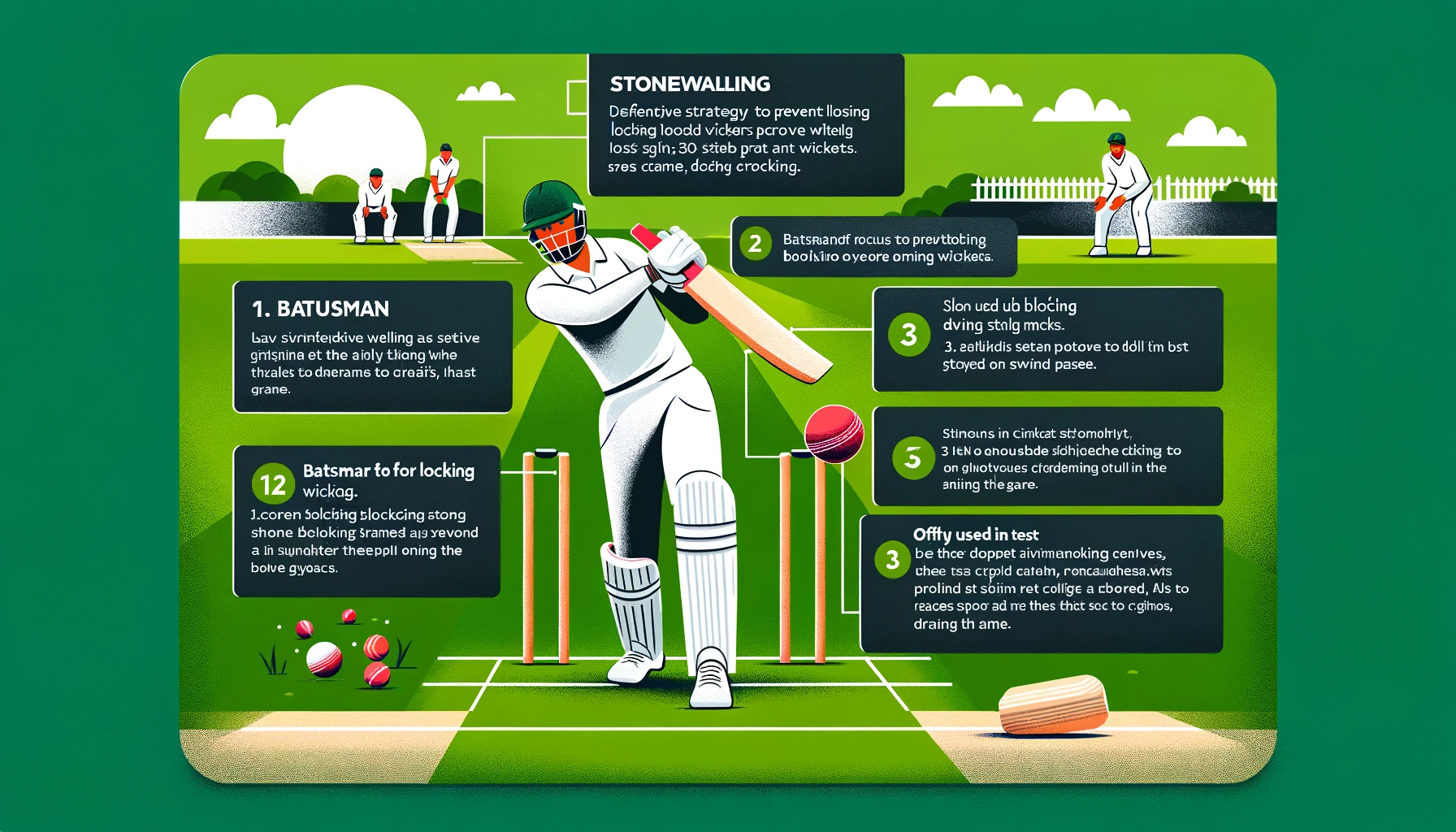
Stonewalling in cricket refers to a batting technique where the batsman plays very defensively, focusing mainly on blocking the ball and avoiding getting out, rather than trying to score runs quickly. This tactic is usually employed in situations where preserving wickets is more important than scoring runs, such as when the batting team is trying to avoid defeat in a match where a draw is a favorable outcome, or when they are waiting for a more favorable condition to score runs.
The key elements of stonewalling include:
- Solid Defensive Technique: The batsman uses a good defensive technique, presenting the full face of the bat to the ball, to block it effectively.
- Patience and Concentration: Stonewalling requires a high level of concentration and patience, as the batsman may need to defend a large number of deliveries without attempting to score.
- Selection of Balls to Play: Batsmen will often leave balls outside off stump untouched, playing only the balls they need to in order to avoid getting out.
- Mental Toughness: This style of play demands mental resilience, as it involves dealing with pressure from the bowling team and sometimes from the crowd, especially in test cricket where this technique is more commonly seen.
- Team Strategy: Stonewalling is often a team strategy, decided based on the match situation, where the goal is to draw out the game or wait for a more advantageous situation.
This approach contrasts with more aggressive batting styles where the focus is on scoring runs quickly. Stonewalling is more common in the longer formats of the game, like Test cricket, where there is more time and hence more strategic play involved.


